Jersey Moving Pro's Professional Services for Relocating File Cabinets
Moving a file cabinet looks simple until you try to push a full, four-drawer unit across a carpet threshold and it tilts like a tower. The weight is deceptive, the center of gravity shifts using every inch, and if the drawers are not secured, you are one stumble away from a cabinet that wants to accordion open and dump years of documents. I have seen more ankles rolled and walls gouged by “quick office moves” than by baby grand pianos. File cabinets are their own category.
Over the years, I have worked through high-rise offices in downtown Newark, second-floor walkups in Montclair, suburban homes with basement offices, and medical practices that run on paper. The lesson holds across counties and floorplans. You need a plan, the right equipment, and a disciplined approach. This is where a specialized service pays for itself, not in slogans, but in fewer surprises and fewer damaged files.
Why file cabinets demand a different playbook
File cabinets combine high density via awkward geometry. A standard 4-drawer vertical cabinet often weighs 150 to 250 pounds empty. Lateral cabinets can push well past 300 pounds, even before you account for paper. Move that weight up a narrow stair using a landing that flips direction and you are now solving a physics problem while holding your employer’s records. If the cabinet is fire-rated, the challenge doubles. The insulation makes the unit best moving companies nj heavier and more rigid, which changes how it behaves under tilt and strap tension.
The second trap is documentation risk. Loose files are not just “stuff,” they are payroll records, compliance documents, legal archives, or protected health information. That dictates how you prepare, whether you can remove contents, and how you label and control access along the route. When a cabinet is tagged “HR - 2018–2022,” it can’t simply go on the truck wherever a space opens up.
Finally, buildings don’t cooperate. Elevators have weight limits and interior dimensions that don’t match your cabinet footprint. Some lobbies prohibit freight on polished floors during business hours. Stair nosings chip, thresholds catch dolly wheels, sprinkler heads are low in older basements, and parking enforcement in dense business districts can erase your buffer time in a hurry. A good organize anticipates the building, not just the furniture.
The anatomy of a safe file cabinet shift
A professional approach starts with a site assessment that reads like a pilot’s preflight checklist. We note floor materials, elevator dimensions, ramp needs for thresholds, and any turns tighter than 90 degrees. We measure cabinets and doorways, not roughly, but with confidence. An extra inch is the difference between “roll through” and “remove door hinges.”
The preparation phase is where most DIY moves cut corners. It’s tempting to tape the drawers shut and muscle the box. That shortcut turns into warping rails, broken locks, and drawers that never align again. The better method uses a combination of drawer management, weight control, and structural support. Vertical cabinets often travel best with drawers emptied into labeled banker boxes, then reinserted or reloaded at destination. Lateral cabinets sometimes permit transport with contents if weight distribution is corrected and drawers are positively locked, but only at short distances, on smooth routes, and under tight strap control. Fire-rated units almost always demand partial unloading to keep mass in a controllable range.
Protection is the other non-negotiable. Cabinet faces and corners are easy to dent. Wrap with moving blankets, then add plastic stretch wrap to hold pads in place. On freshly painted corridors or high-end millwork, add corner guards to the walls. Every buckle, hook, and dolly touchpoint is checked for contact points to avoid scuffs.
Equipment choice matters. Appliance dollies with ratchet straps stabilize vertical units. For lateral cabinets, low-profile, heavy-duty dollies with anti-tip blocks keep the weight closer to the floor. For stairs, a powered stair climber reduces brute force and gives you control on descent. For elevators, we use neoprene floor runners and edge protection so the building stays friendly to the method. The point is not to show up with a truck and hope. The point is to bring the right tool for the cabinet you actually have, on the path you must navigate.
Jersey Moving Pro’s field-tested method for file cabinets
Experienced movers develop rituals for a reason. They eliminate variables. With file cabinets, the Jersey Moving Pro crew follows a sequence that has been refined across law offices, municipal departments, and home studies. The steps seem simple on paper, but they safeguard what matters.
First, we identify cabinet type and contents policy during booking, not at the door. Certain offices require that files never leave their drawer. Others prefer complete unloading with sealed boxes. We align our method via the policy and the building’s rules, then plan the manpower accordingly.
Second, we handle keys and locks like a chain-of-custody process. Keys are tagged, logged, and moved by the lead, then secured in a designated bag. If a cabinet has no key, we have lockout straps that keep drawers closed and distribute tension without crushing the face. It’s a small procedure that prevents big headaches.
Third, we isolate the cabinet from surfaces, wrap fully, and block open handles using foam or pad folds. Sharp edges can cut through pad seams in the course of long carries or elevator bumps. Padding isn’t decoration, it’s armor.
Fourth, we load for balance. Cabinets stand against the headboard or a fixed wall within the truck, never floating in the middle of a stack. We strap with downward and lateral tension to eliminate oscillation. On mixed loads with desks and bookcases, we stack by weight class and rigidity so a cabinet never becomes a fulcrum for lighter items during a stop.
Fifth, we reverse the wrap and re-level at destination. Most floors are not perfectly flat, particularly in older buildings. We shim discreetly where needed so drawers glide rather than drift. It takes a few minutes and saves a year of annoyance.
That’s the short version. In practice, it’s a rhythm that keeps people and paper safe.
Case notes from New Jersey offices
One spring, a medical practice in Essex County consolidated two satellite locations into a new suite near Newark Liberty Airport. Elevator capacity was 2,500 pounds, but the door opening barely cleared lateral cabinet widths. The building also enforced a quiet period during clinic hours. The Jersey Moving Pro team staged cabinets on rubber wheeled dollies the night prior, then moved in two waves at dawn and late afternoon. Documents stayed in drawers under internal policy, so we doubled straps and added anti-tip planks. It added half an hour per cabinet and removed a day of re-filing risk. The practice manager told us later that the only reason the transition worked was because patient records never disappeared into anonymous boxes.
Another week, a law firm in Bergen County relocated from a third-floor walkup with no freight elevator. Vertical cabinets measured 26 inches wide with a staircase that pinched to 28 inches at the turn. We removed drawer bodies, wrapped the shells, and used a powered stair climber to control descent. Each drawer went into sequential banker boxes labeled by cabinet and slot: VC-3, Drawer 2 of 4. Loading felt slow, but unpacking was mechanical, not creative. The partner in charge called it the most boring part of the move, which is exactly the review you want for legal files.
When to unload and when to roll intact
There is a persistent debate in offices. Should you empty every drawer or keep contents in place? The answer is situational. Emptied drawers cut weight and reduce stress on slides, but you trade that for repacking time and chain-of-custody precautions. Keeping contents inside avoids re-filing but raises the risk of structural strain and tipping.
I use three filters to make the call. If a cabinet is fire-rated or lateral with long spans, lean toward unloading to at least 50 percent. If the route involves stairs or long exterior distances with irregular surfaces, unload. If the policy mandates locked drawers via contents in place, boost manpower per piece, shorten travel segments, and dodge ramps that introduce sudden pitch changes. There are also hybrid moves where you remove the heaviest drawers, lock the rest, and balance the load. Every rule has an exception, but the common thread is control. If you cannot control the cabinet’s center of gravity throughout the shift, the cabinet controls you.
Integrating cabinet moves into whole-office moves
File cabinets rarely travel alone. They are part of a constellation that involves desks, bookcases, safes, appliances, and conference tables. Coordination matters. You don’t want to discover at 3 p.m. that the path to the truck is blocked by stacked chairs while the cabinets sit behind them. Staging zones are the cure. We establish a departure lane, a wrapping zone, and a neutral zone for items awaiting the next elevator cycle.
This is where the skill set used for safes, treadmills, and appliances overlaps. Jersey Moving Pro’s personnel handle heavy and awkward items daily: treadmills and ellipticals with hard-to-manage weight distribution, refrigerators that must be prepped upright to protect compressor oil, and safes that load using cribbing and winch control. The same discipline applies. Every heavy item needs its tailored gear, its plan, and its buffer time. When the team knows how to navigate a 700 pound safe or a washer-dryer set through tight corners, a 250 pound cabinet becomes a controlled task rather than a wild card.
Security, privacy, and compliance under motion
A shift can comply with policy while still staying efficient. We build privacy into the choreography. Cabinets with personnel records load last and unload first, so sensitive information never lingers on the truck overnight. If an overnight is unavoidable, those units are strapped forward and blocked by non-sensitive cargo, then the truck is parked under surveillance with motion alarms active. Sealed-key protocols prevent ad hoc access. On multi-tenant buildings, we use screen walls or portable partitions when staging near public areas so labels are not visible to passersby.
For medical, legal, and financial clients, the chain-of-custody log is not overkill. It’s an insurance policy. The lead maintains a simple ledger: cabinet ID, origin room, load time, truck position, unload time, and destination room. The ledger is boring and that’s the point.
What slows cabinet moves, and how pros avoid it
Two friction points appear in nearly every cabinet job. The first is surprise weight. You arrange for a standard vertical and find five lateral units packed with paper, or you meet a generation of suspended-file rails installed upside down and ready to release drawers mid-move. The second is path constraints. A hallway that looks clear on a walkthrough becomes an obstacle course during business hours.
Preparation solves the first. Ask for photos with a measuring tape in frame. Request a quick contents snapshot: full, half, or light. If the client can share model numbers, even better. For path constraints, schedule transfers during low-traffic windows and set up barricade tape or cones to protect the corridor. If the building requires extended hours for elevator use, adjust crews rather than rushing. This is one reason Jersey Moving Pro offers extended hours. The quiet window early morning or late evening is often the safest time to move cabinets without disrupting operations or risking collisions with foot traffic.
Weather is another variable. A drizzle turns ramps slick, and a snow flurry makes exterior transitions dangerous. We lay non-slip runners, switch to all-terrain dollies where appropriate, and add manpower for spotters. If rain is heavy, shrink-wrapped padding keeps cabinet faces dry and prevents dye transfer from wet pads onto paint. Small steps that convert bad weather into a controlled condition.
County-by-county realities across the Garden State
New Jersey is compact, but every area has its own moving personality. Cabinet work in Bergen County often involves mid-rise buildings with limited loading zones. Parking management becomes the mission. In Essex County, older building stock in areas like Montclair adds tight staircases and idiosyncratic landings. Union and Middlesex frequently include corporate parks through firm dock schedules. In Passaic and Morris, many offices sit in converted houses with soft floors and tight turns. The detail that keeps a day on track in one county might be irrelevant in another.
Jersey Moving Pro manages these regional quirks because the team has seen them repeatedly. In Union County, for example, we learned to pre-clear dock appointments and carry extra edge protectors for loading ramps that take a beating from shared use. In Somerset and Monmouth, longer exterior walks from office suites to parking require more floor runners and weather planning. In ocean communities, salt and sand demand added care for wheel bearings and a protocol to clean equipment between jobs to keep grit out of caster races.
How file cabinet moves intersect with the rest of your office
Cabinets hold paper, but the office functions because dozens of details dovetail. If the kitchen is still boxed in the new space, the staff can’t get coffee. If the entertainment center in a training room arrives late, orientation stalls. A holistic move plan accounts for these, not just the headline items. We map dependencies. If the payroll team needs their lateral units online by noon, then those cabinets load with priority tags and the desks follow. If the executive suite demands the conference credenza for an afternoon call, it rides next to the cabinets near the truck door.
The same planning mindset that protects files also ensures other sensitive items land well. Those delicate chandeliers in a renovated brownstone office travel in customized crates. Leather furniture breathes in padded wraps, never in plastic alone, to prevent condensation. Wardrobes and armoires get wardrobe cartons or internal bracing so doors do not rack under truck vibration. It sounds like general transferring advice, but when the file cabinet timetable sets the day’s spine, the rest of the tasks must align with it.
Training and the human factor
People move cabinets, not policies or equipment. Training exhibits in small choices. A rookie might tilt a loaded lateral cabinet to clear a door saddle, which shifts mass and risks a tip. A seasoned lead will build a small ramp to keep the cabinet level over the saddle. Crews that practice drawer removal know to label rails and retain screws in a taped bag inside the cabinet shell so hardware doesn’t disappear. Background-checked employees are table stakes in this business, but ongoing training separates safe from lucky.
The best crews also know when to pause. If a stair tread squeaks and flexes under load, they adjust the route or reduce cabinet mass immediately. If a cabinet face bow shows stress, they unload another drawer, reset straps, and proceed. These micro-decisions are invisible to a client who sees steady progress, but they are the reason you end the day with everything intact.
Jersey Moving Pro in practice: two vignettes
During a winter move in Morristown, a client scheduled cabinet transport on a day through a forecasted wintry mix. Rather than cancel, the Jersey Moving Pro team shifted the sequence. We loaded cabinets while a dry morning window, then paused while sleet passed, using the interlude to stage desks in the vestibule. Because cabinets were already secured up front in the truck, the wet ramp period affected only wrapped desks that tolerated moisture better. The move finished on time without a single slip on the ramp. It wasn’t heroics, just good timing and sequence control.
In another case, a university office near Rutgers needed five lateral cabinets transported between buildings with no dock access and intermittent student traffic. We set two spotters dedicated to pedestrian control, ran floor protection along the entire corridor, and moved in synchronized pairs. One crew prepared the destination rooms, leveling cabinets and installing anti-tip brackets, while the other ferried units. The client measured the process in hours saved because re-filing was unnecessary and the cabinets were usable immediately.
The surprisingly technical art of labeling
Labeling is not glamorous, but file cabinets make it necessary. Sticking a piece of tape on the top with “Accounting” is not enough. The motion of transport and the angle of sight in a crowded truck turn that label into a guess. Side labels at eye level, on two adjacent faces, remove ambiguity. Also, label by cabinet and drawer position if contents are removed. A simple code supports: AC-2 for Accounting cabinet 2, D3 for drawer 3. Write destination room, not just department, and include any access notes like “back hallway, left suite entrance.” It trims minutes each time a mover chooses the next cabinet to unload, which compounds into hours on a multi-cabinet job.
Why specialty equipment is not optional
There is a specific pain that comes from using the wrong dolly. Small hard wheels transmit every floor imperfection to the cabinet, which shakes contents and loosens joints. Large soft wheels roll smoother and protect floors. Ratcheting straps on appliance dollies create uniform pressure and resist creep. Forearm straps have their place on couches, but they are a bad idea on cabinets because they give an illusion of control without any. Powered stair climbers aren’t a luxury on heavy cabinets in tight stairwells. They are the line between a controlled descent and a near miss.
Jersey Moving Pro invests in this equipment because it solves real problems. A cabinet that clears a stair in one continuous, stable motion is safer for the crew and the cabinet. A lateral unit that rides low and level across tile floors arrives without the micro-dents that appear when a drawer face kisses a door frame. The difference demonstrates when you open the drawers at destination. They still glide, and the lock still aligns on the first turn.
Setting expectations through realistic timeframes
Clients often ask how long a cabinet relocation takes. The honest answer is a range. A single vertical cabinet down an elevator and onto a waiting truck can be loaded and secured in 15 to 25 minutes if paths are clear. Add tight stairs, weather, or a policy to keep drawers loaded and the same piece might take 45 minutes. Multiply that by a bank of ten and you can see how planning makes or breaks a schedule.
What helps is sequencing. Load cabinets early when crew energy is high and building pathways are uncluttered. Wrap and stage the rest while elevators are tied up. If extended hours are available, start early to dodge rush-hour elevator queues and to keep sensitive documents away from daytime foot traffic. This is one of the reasons Jersey Moving Pro offers extended hours. It reduces conflict with building operations and buys you calm.
Jersey Moving Pro’s guidance for clients preparing cabinets
Clients control the single biggest variable: preparation. A short, focused checklist prevents backtracking and safeguards records.
- Decide policy on contents early. Will drawers be emptied, partially reduced, or kept full and locked? Gather and tag keys. If keys are missing, note which cabinets need lockout straps. Label cabinets on two sides at eye level with destination room and cabinet ID. Clear access paths and reserve elevators or docks as required by the building. Communicate any special contents such as legal holds or medical records so chain-of-custody can be planned.
Through these steps, even complex cabinet moves run faster and safer because ambiguity disappears.
How cabinet moves dovetail with broader Jersey Moving Pro capabilities
Most offices don’t move just cabinets. They relocation kitchens, entertainment centers for training rooms, bookshelves, and entire living room sets in home-office scenarios. The same crews that protect a file cabinet face know how to transport a refrigerator after properly draining water lines and securing shelves. They pad leather furniture to prevent scuffs and keep it breathable, they disassemble and reassemble sectional sofas without tearing corner clips, and they handle washing machines with transit bolts reinstalled to protect the drum. That cross-training exhibits when timelines compress. A team that can shift fluidly between a lateral cabinet and a dining room set is a team that keeps the truck loaded in the right order.
Jersey Moving Pro applies that cross-discipline approach to schedule coordination as well. When a relocation near Princeton University overlaps with a holiday weekend, they segment the relocation to avoid congestion, provide real-time updates to clients who need to align IT cutovers, and use written contracts with binding estimates so expectations match outcomes. None of this is flashy. It’s dependable.
The small touches that matter after the truck pulls away
A transfer does not truly finish when the last dolly rolls onto the truck. The aftercare is where quality shows. Leveling cabinets on slightly pitched floors prevents drawers from drifting open. Installing anti-tip brackets where required by building policy reduces the chance of a future mishap. Checking the lock alignment and adjusting strike plates avoids recurring service calls. These are ten-minute tasks that pay dividends for years.
We also recommend a quick map for the destination. Place cabinets in their final positions before the rest of the furniture crowds the room. It is much easier to shift a desk than a 300 pound lateral cabinet once computers are hooked up. Marking floor protection routes in the new space avoids damaging an office that just received fresh paint or new carpet tiles the day before.
A word on trust and consistency
In any transfer, you are trading uncertainty for a schedule. The less guesswork, the smoother the day. The Jersey Moving Pro standard is built on predictability. Background-checked staff, comprehensive insurance, modern clean trucks, and a bias for written detail keep surprises to a minimum. Binding estimates exist so that cost debates do not overshadow the work. Real-time updates exist because even the best arrange benefits from communication when a dock opens early or an elevator goes offline.
Relationships with building managers, familiarity through towns from Madison and Chatham to Summit and New Providence, and comfort working near universities or airports, all of that local knowledge shows up when you need a solution in the moment. If a cabinet move intersects using a school break in Cape May or an early snowfall in Sussex County, the plan adapts because it is built by people who factor in those realities, not by a template.
Bringing it all together
File cabinets are deceptively simple. They are also heavy, valuable, and tightly tied to your operations. Treat them like the critical assets they are. Measure, plan, protect, and move with intention. Use the right tools and the right timing, and listen to the building. Control the center of gravity, document the path, and level at the end. Do these things and the day becomes routine in the best sense of the word.
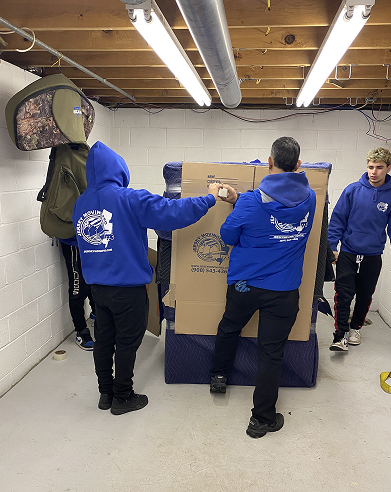
Jersey Moving Pro has built its specialized services for moving file cabinets around those fundamentals. Not because it sounds good, but because the last drawer should close as smoothly in the new room as it did in the old one, and because your team should get back to work without hunting for missing files or wrestling a crooked lock. When a move feels almost boring, that is the signature of a well-run cabinet relocation.